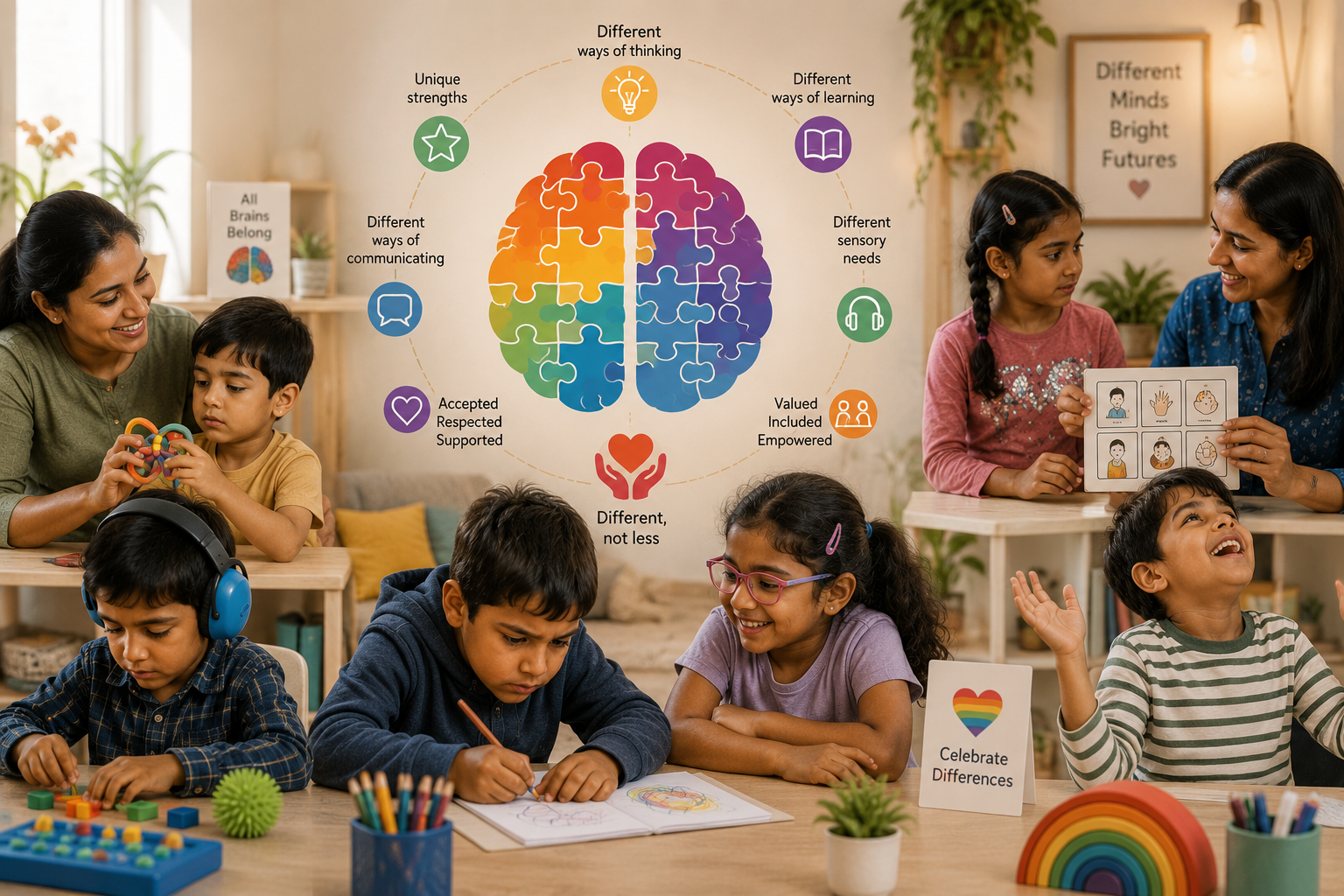

Hearing the words, “Your child is autistic,” can bring many emotions. Parents may feel relief at finally having answers, while others may experience uncertainty, worry, or grief. These reactions are completely understandable. However, it is important to remember that an autism diagnosis does not change who a child is. It simply helps us better understand how they experience the world and how we can support them.
Autism is not a limitation on a person’s potential. It is a different way of thinking, communicating, learning, and interacting with the world. Every autistic individual is unique, with their own strengths, interests, challenges, and aspirations.
Understanding Autism
Autism Spectrum Disorder (ASD) is a lifelong neurodevelopmental condition that influences how a person communicates, interacts socially, processes sensory information, and responds to their environment. It is called a “spectrum” because autism presents differently in every individual. No two autistic people are exactly alike.
Some autistic individuals communicate using spoken language, while others may use alternative forms of communication. Some enjoy social interaction but find it difficult to understand social cues, while others prefer spending time alone. Many experience sensory differences, such as being unusually sensitive to sounds, lights, textures, or smells. Others develop deep interests or enjoy predictable routines that help them feel secure.
Looking Beyond the Diagnosis
One of the most important things to remember is that autism is only one part of a person’s identity. An autistic child is first and foremost a child—with their own personality, talents, preferences, and dreams.
Many autistic individuals demonstrate remarkable strengths, including honesty, creativity, attention to detail, exceptional memory, persistence, and deep knowledge in areas of interest. At the same time, they may need support with communication, emotional regulation, executive functioning, or adapting to unfamiliar situations.
Recognising both strengths and challenges allows families and professionals to provide support that is respectful, individualised, and empowering.
Supporting Autistic Individuals
Effective support begins with understanding rather than trying to change who a person is. Parents, teachers, therapists, and communities all play an important role in helping autistic individuals thrive.
Practical strategies include creating predictable routines, respecting sensory preferences, using clear and consistent communication, encouraging strengths and interests, supporting emotional regulation, and making reasonable adjustments in home, school, and community environments.
Collaboration between families and professionals is equally important. When everyone works together with shared goals and open communication, children receive more consistent and meaningful support.
Final Thoughts
An autism diagnosis is not the end of a child’s journey—it is often the beginning of greater understanding. Early identification and appropriate support help children develop skills, build confidence, and participate meaningfully in family, school, and community life.
The goal is never to change who an autistic person is. The goal is to create environments where they are understood, respected, and given opportunities to flourish.
Acceptance does not mean lowering expectations. It means recognising that success may look different for every individual and celebrating progress in all its forms.
Takeaway
Autism is not something to look beyond in order to see the person—it is one part of who they are. By understanding both the strengths and support needs of autistic individuals, we move from focusing on limitations to creating opportunities for growth, participation, and belonging. Every autistic person deserves acceptance, respect, and the chance to thrive as their authentic self.
References
American Psychiatric Association. (2022). Diagnostic and statistical manual of mental disorders (5th ed., text rev.; DSM-5-TR). American Psychiatric Association.
Fletcher-Watson, S., & Happé, F. (2019). Autism: A new introduction to psychological theory and current debate. Routledge.
Lord, C., Brugha, T. S., Charman, T., Cusack, J., Dumas, G., Frazier, T., Jones, E. J. H., Jones, R. M., Pickles, A., State, M. W., Taylor, J. L., & Veenstra-VanderWeele, J. (2020). Autism spectrum disorder. Nature Reviews Disease Primers, 6(1), 5. https://doi.org/10.1038/s41572-019-0138-4
World Health Organization. (2022). International classification of diseases for mortality and morbidity statistics (11th Revision). World Health Organization.